
A Home for 2nd Place
The winner takes it all. Not just a song but also the motto of today’s world. Our society is made for protagonists. First place counts, the rest are losers. But if we look more careful, we see that 2nd places not only mean that there is only one ahead, but that they are characterized by an intriguing mix of discomfort, fighting spirit, humbleness, resilience and perspective. If something has been traded three, four or more times, it remains ‘secondhand’. We started with a group investigation, definition, research and mapping exercise exploring the concept of 2nd place, in literature, history and media, and digging into architectural precedents around the world.
Tutors: Maarten Willems, Ady Steketee
Building Belonging Together – Eslem Karakoc
In our hectic modern world, where social connections often feel fleeting, architecture has the power to transform mere buildings into vibrant communities. This thesis explores this transformative potential, focusing on the Van Adrichemweg post-war Dutch apartment buildings in Rotterdam’s Kleinpolder district. At the heart of this study is a redefinition of what it means to be “second.” By embracing the potential of being second, we unlock a reservoir of untapped potential and the bliss of being “good enough”—not the best, nor the worst, but possessing the motivation and hope to strive for more. This perspective highlights the strength in mediocrity.


The City of the Permanent Underclass – Daan Post
This project aims to explore citizen-led solutions to urban insecurity in the Hopley Farm Settlement of Harare, Zimbabwe. In 2005, housing in Zimbabwe became highly politicized as a consequence of elections held that same year with the rise of the opposition to the ruling party at the time. The settlement grew out of a holding camp meant to hold people displaced from their informal homes until such a time that a solution was found for their relocation. Today, Hopley is a representation of human resilience; what with a significant proportion of its dwellings being constructed by those who occupy them, but perhaps more so it is a representation of the humanitarian crisis associated with that urban insecurity caused by Operation Murambatsvina. It is the intention of my research to make the case for an architectural solution to the latter by harnessing the many strengths that can be found in the former.


Filling up the emptiness – Rick Wassenaar
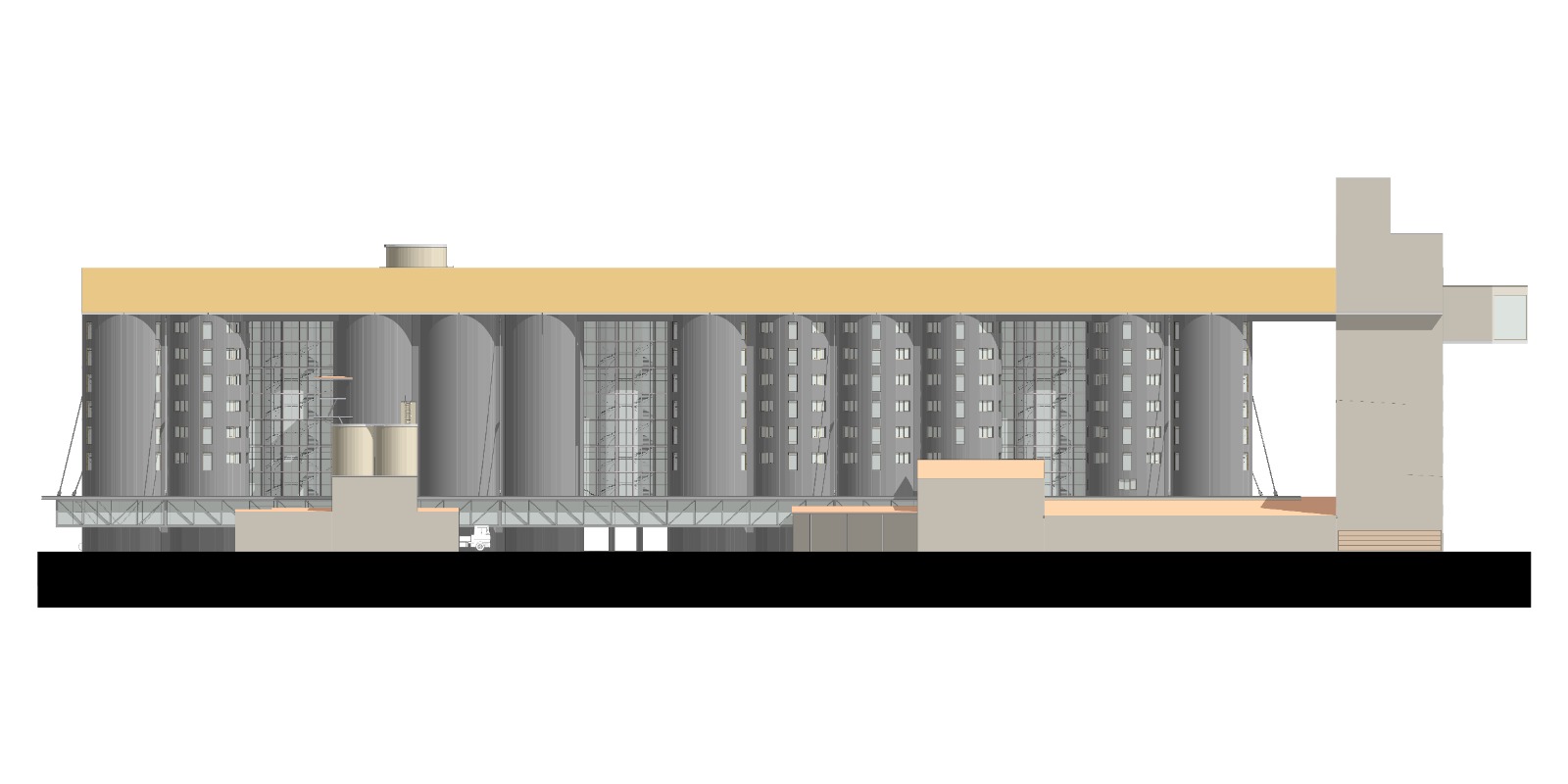
The transformation of the Glebe Island silos showcases the possibility to make a homeless accommodation a destination for others to go to, enjoy, and spend their free time as well. To achieve this, several functions are added, all contributing to the whole system. A viewing platform overlooking the Sydney skyline with a restaurant, bar and rooftop garden attract people from all areas. As the system for this homeless accommodation is based on Emmaus, there is an additional focus on their impact on the environment. Therefore, a thrift store functions as a way how the companions living here, directly contribute to a better environment. By reselling products that would otherwise get thrown away, they help to deal with Australia’s throwaway culture and give all the companions a shared purpose to work for. Locating this thrift store in a ‘floating box’ suspended from the Glebe Island Silos, make for an interesting architectural project housing a fully functioning rehabilitation system for homeless people with Trauma Informed Design principles implemented in its design.




Breaking the Cycle – Simon Rood
This project aimed to find a structural solution to the growing problem of young adult homelessness. By focusing on a structural solution on a larger scale, and a simple intervention that makes almost every available studio apartment a potential dwelling for young adults that are currently homeless, a way to significantly increase the amount of available ‘Housing First’ dwellings has been found. Aside from that, some attention is provided to the direct and indirect living environment and the number of social interactions it facilitates, to create a situation where the young adults can more easily find connections with people that fall outside of their existing social circle – with the goal of diversifying their social network. All of this, to make it easier for the counselors to do their job, and really help these young adults.


The Canopy – Eda Veznehar Demir
In the aftermath of the February 2023 earthquake in Antakya, Turkey, this project focuses on transforming existing indoor soccer halls into multifunctional community hubs. Framed within the thematic landscape of “a house for 2nd place,“ the project explores pathways to mental and cultural recovery amidst physical destruction. By integrating elements of Antakya’s cultural heritage into the fabric of rebuilt communities, the project creates spaces that not only provide shelter but also nurture a sense of belonging and continuity, embodying the community’s resilience and spirit. Additionally, integrating the concept of a “materials passport“ ensures that materials used are efficiently managed, reused, or recycled, further enhancing the project‘s sustainability.


Transforming an oil rig – Wesley Massij
Caused by global climate change, water levels are rising faster than predicted. The Netherlands has several future scenarios with managing the rising water; adapting to a new sea level, blocking the water by building dykes, or a combination of the two. Oil rigs in the North Sea – with structures high above sea level – already provide a solution to deal with a higher water level. However, the structures will become vacant now that the energy transition is happening rapidly. Specifically, research has been done, in ways of literary review and interviews, to understand design principles and theories that ensure the well-being of the platform’s residents. This resulted in routing to promote social interactions, materials to boost physiological well-being, and spaces that hold the desires of the residents. Using the research the structure of the platform was redesigned to provide opportunities for research while considering the wellbeing of residents during longer stays at the remote location.


